Showing posts with label innovation. Show all posts

Thursday, 19 October 2017

Teachers for tomorrow

by Andreas Schleicher
Director, Directorate for Education and Skills

Anyone flying into Abu Dhabi or Dubai is amazed how the United Arab Emirates has been able to transform its oil and gas into shiny buildings and a bustling economy. But more recently, the country is discovering that far greater wealth than all the oil and gas together lies hidden among its people. If the country would live up to its ambition to be among the world’s 20 leading school systems, as measured by PISA, that would add over USD 5 600 billion to the economy over the lifetime of today’s primary school students, or the equivalent of 9 times the size of the UAE’s economy. That is because people with a solid foundation of knowledge, with creative, problem-solving and collaborative skills, and with character qualities such as mindfulness, curiosity, courage and resilience, make a so much greater contribution to economic and social progress.

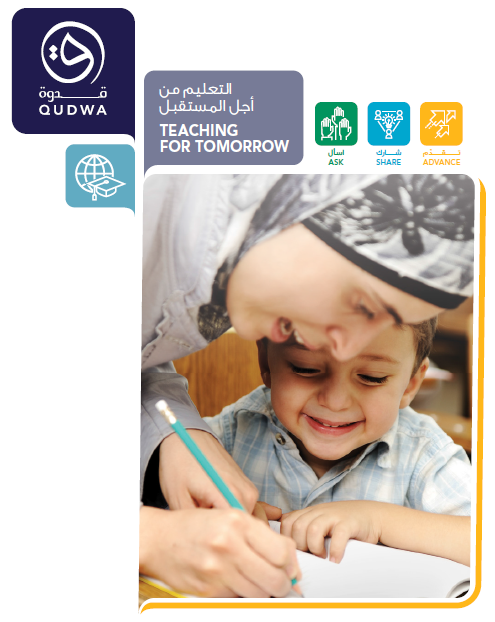
The trouble is that the UAE has been slow to invest in the people who can dig up and develop that new wealth: highly effective and creative teachers. That might be about to change. On 7 October, Crown Prince Mohammed bin Zayed Al Nahyan invited over 800 teachers from around the world to the first Qudwa Global Teachers’ Forum to reimagine the profession. It was the first such event where the talk wasn’t just about teachers, but where teachers talked about how they can prepare today’s students for their future, rather than for our past. In what was dubbed the “ask’ track of the event, teachers explored the future of teaching and the design of innovative learning environments. The “advance” track featured amazing role models for tomorrow’s teachers. And in the “share” track, teachers exchanged views on innovative practices.

For a start, teachers drew up a job description for the profession far bolder than what governments typically come up with. Of course, teachers need to have a deep understanding of what they teach and whom they teach, because what teachers know and care about makes such a difference to student learning. But Qudwa also expects teachers to be passionate, compassionate and thoughtful; to encourage students’ engagement and responsibility; to respond effectively to students of different needs, backgrounds and languages; to provide continual assessments of students and meaningful feedback; to promote collaborative learning, tolerance and social cohesion; and to ensure that students feel valued and included. And it expects teachers themselves to collaborate and work in teams, and with other schools and parents, in order to advance their profession.

Most of the teachers at the Qudwa forum acknowledged there was even more involved than this. Successful people generally had a teacher who was a mentor and took a real interest in their life and aspirations, who helped them understand who they are, and revealed their passions and how to build on their strengths. These were teachers who instilled a love of learning and taught them how to build effective learning strategies, and who helped them discover where they can make a difference to social progress.

Put all of this together and it seems teachers would have every reason to ask for much better pay to meet those expectations. But I heard no one at the forum saying they need more money before they can make a start. That is quite remarkable, because that’s usually the killer argument with which we pass responsibility on to someone else. Instead, the event offered many promising answers for how teachers can meet incredible expectations.

Teachers’ commitment to helping all learners

What impressed me most was the participants’ deep commitment to equity, to do whatever it takes to leverage the talent of every learner. That came across in many ways. First, in the belief that every student can learn, and the importance of embracing diversity in learning with differentiated approaches to teaching. This means building instruction from students’ passions and capacities, helping students personalise their learning and assessments in ways that foster engagement and talents, and encouraging students to be ingenious. As Aggeliki Pappa, a teacher from Greece, put it: “We need to break down the belief that some students cannot learn or are disabled. Students are just differently abled.”

It also came through in the way in which so many of these teachers are addressing social disadvantage, even in the most difficult circumstances. Children from privileged backgrounds will always find open doors in life, but those from disadvantaged backgrounds have only one card to play, and that is to meet a teacher like those at the Qudwa forum and get a good education. If they miss that boat, often there will be no second chance for them. And how we treat the most vulnerable students reflects who we are. I remember Manil Maharjan, a teacher from Nepal, saying, “When students can see a positive future, that’s when can concentrate on their present.” Or Jacque Kahura, from Kenya, who noted: “If we understand these students and their life and their background, then we can fill the multiple roles they need.” At the global level too, the world is no longer divided between countries that are rich and well-educated and those that are poor and badly educated. Countries can choose to develop a superior education system, and if they succeed it will yield huge rewards.

Third, teachers’ commitment to equity came through in how participants at the Qudwa forum embraced learning science and pedagogical innovation. This is about how teachers and schools can better recognise that students learn differently, and give students more ownership over the time, place, path and pace of learning. As Niall McGonigle, from the UAE, put it: “No matter what you're teaching, there's always a way to involve children in the process.” Parveen Jaleel, another teacher from the UAE, added: “Just put the child in the centre and ignore everything else.”

I was also impressed by teachers’ commitment to their profession beyond the role they play in the classroom. These teachers saw themselves as learners with a growth mindset, and as contributing collaboratively to system leadership. As Richard Spencer, from the United Kingdom, noted: “Great teachers are great learners and students need to see their teachers learning.” The heart of this is working with a high degree of professional autonomy and in a collaborative culture. As Souad Belcaid, from Morrocco, noted: “Don’t be afraid of feedback”; and Eldijana Bjelcic, from the United States, added pointedly: “All feedback requires trust between provider and recipients.”

We heard how teacher development must be viewed in terms of lifelong learning, with initial teacher education conceived as providing the foundation for ongoing learning, rather than producing ready-made professionals. And teachers explained how many of them are already engaged in research as an integral part of what it means to be a professional teacher.

Responding to a rapidly changing world

The sharing session also exposed many examples of how digital technology can leverage great teaching, even if it will never replace poor teaching. What if we could get teachers around the globe working on curated crowd-sourcing of the best educational practices, making the Qudwa forum a permanent institution? Technology could create a giant open-source community of teachers and unlock the creative skills and initiative of all teachers, simply by tapping into the desire of people like you to contribute, collaborate and be recognised for it. I remember Paul Solarz saying: “I've been teaching for 19 years. I was one of the most reluctant technology users. But now my students are my partners in bringing technology into the classroom.”

But the heart of this is not technology; it is ownership. As Foreign Minister Sheikh Abdullah mentioned at the opening, while learning will become more digital, teaching remains a deeply human activity, based on trust and passion. As I could see at the forum, when teachers feel a sense of ownership over their classrooms, when students feel a sense of ownership over their learning, that is when productive learning takes place. So the answer is to strengthen trust, transparency, professional autonomy and the collaborative culture of the profession all at the same time.

But the most central reason why teachers’ ownership of the profession is a must-have rather than an optional extra lies in the pace of change in school systems. Even the most effective attempts to push a government-established curriculum into classroom practice will drag out over a decade, because it just takes so much time to communicate the goals and methods through the different layers of the system and to build them into traditional methods of teacher education. In this age of accelerations, such a slow process is no longer good enough and inevitably leads to a widening gap between what students need to learn and what teachers teach. When fast gets really fast, being slow to adapt makes us really slow.

The only way to shorten that pipeline is for teachers themselves to be involved in the design of curricula and the pedagogies to enact and enable 21st-century curricula. As many teachers said, subject-matter knowledge will be less and less the core and more and more the context of good teaching. Twenty-first century education is about helping children develop a reliable compass and the navigation tools to find their own way through our increasingly complex, uncertain, ambiguous and volatile world. While governments can establish directions and curriculum goals, teachers need to take charge of the instructional system.

In the past, the policy focus was on providing education; tomorrow it needs to be on outcomes, shifting from looking upwards in the bureaucracy towards looking outwards to the next teacher, the next school and the next education system. In the past, administrations emphasised school management; tomorrow the focus needs to be on instructional leadership, with leaders supporting, evaluating and developing high-quality teachers and designing innovative learning environments. As Armand Doucet, from Canada, said:  “We need administrators who are leaders and who understand that teachers need to do innovative things to get through to students.” Over dinner with a group of teachers from the Varkey Global Teacher Prize community, we talked about how assessments and accountability need to evolve, too, as school systems advance, and as rules become guidelines and good practice, and ultimately, as good practice becomes culture.

The Qudwa forum showed how effective learning environments constantly create synergies and find new ways to enhance professional, social and cultural capital with others. They do that with families and communities, with higher education, with other schools and learning environments, and with businesses. Participants heard how building trust between a teacher and parents requires regular and open communication. It also means creating places where parents, children and teachers don’t just talk but do things together. This might be something as simple as having breakfast together, which happens in Nablus, or more structured activities, like the innovative Maker Space in Bulgaria. As Anika Mir, from the UAE, put it: “Parents can be our assets and our allies as teachers”; and Stephen Ritz said: “We need to push the walls of the classroom out and bring the community in.”

I was also struck by how deeply participants engaged in imagining the role of teachers for tomorrow. The past was constructed on divisions, with teachers and content divided by subjects and students separated by expectations of their future career prospects. The Qudwa forum showed how the future needs to be integrated, with an emphasis on merging subjects and combining students. It also needs to be connected, so that learning is open to the rich resources in the community. Those participants who joined Ger Graus from Kidzania saw how we can raise and widen horizons if we can better integrate the world of schooling with real life. Also Soonufat Supramaniam, a teacher from Malaysia, showed participants how much can be achieved by inviting people from different areas and careers to come to schools and discuss their careers.

Instruction in the past was subject-based; instruction in the future needs to be more project-based. It needs to build experiences that help students think across the boundaries of subject-matter disciplines. The past was hierarchical; the future is collaborative, recognising both teachers and students as resources and co-creators. In the past, schools were technological islands, with technology often limited to supporting existing practices, and students always outpacing schools in their adoption of technology. Now schools need to harness the potential of technologies to liberate learning from past conventions and connect learners in new and powerful ways, with new sources of knowledge and with one another.

Tomorrow begins now

All that will have profound implications for the work organisations of schools. The past was about prescription; the future is about an informed profession, where professional and collaborative working norms replace the industrial work organisation, with its administrative control and accountability. Professionalism means emphasising the internal motivation of members and their ownership of professional practice. That demands public confidence in professionals and the profession, professional preparation and learning, collective ownership of professional practice, and acceptance of professional responsibility in the name of the profession. With all of that, tomorrow’s teachers will enjoy deep professional knowledge, a high degree of professional autonomy, and a collaborative culture.

The challenge is that such transformation cannot be mandated by government, which leads to surface compliance, nor can it be built solely from the ground up. Education needs to become better at identifying and championing key agents of change, and better at finding more effective approaches for scaling up and spreading innovation. That is also about finding better ways to recognise, reward and celebrate success, to do whatever is possible to make it easier for innovators to take risks and encourage the emergence of new ideas. Education needs less virtual reform and more real change.

None of this is easy; none of it will be done overnight. And the status quo will always have many protectors. But that’s no reason to give up on education as the most powerful tool for building a fairer, more humane and more inclusive world.

Knowledge and skills have become the global currency of 21st-century economies. But there is no central bank that prints this currency; we cannot inherit this currency, and we cannot produce it through speculation. We can only develop it through sustained effort and investment by people and for people. And no school system can achieve that without attracting, developing and sustaining great teaching talent.

Last but not least, everyone took the theme of the event, “teaching for tomorrow”, literally. What made this Qudwa forum special for me was that it was not about the day after tomorrow, the next year or the next life, but about what everyone can introduce into their daily work tomorrow – literally. The UAE should be credited for offering such an amazing platform to work together on this globally. As Sean Bellamy said: “If the education system is diseased, then the Qudwa has gathered the cure here under one roof.” And perhaps that outward-looking perspective will turn out to become the key differentiator for seeing progress in education. The division may be between those schools and education systems that feel threatened by alternative ways of thinking and those that are open to the world and ready to learn from the world’s best experiences.

Links
Qudwa Global Teachers’ Forum

Photo credit: Qudwa 2017

Thursday, 5 October 2017

Why teaching matters more than ever before

by Stavros Yiannouka, CEO, WISE – World Innovation Summit for Education and Andreas Schleicher, Director, Directorate for Education and Skills


Teaching and learning lie at the heart of what it means to be human. While animals teach and learn from each other through direct demonstration, observation and experience, humans are unique in their ability to convey vast quantities of information and impart skills across time and space. We are also, as far as we know, unique in our ability to engage in and convey our thinking around abstract concepts such as governance, justice and human rights.

Technology has always played an indispensable role in this process. Starting with language and then writing, humanity was able to separate the process of teaching and learning from the constraints of direct demonstration, observation, and experience. The invention of paper and ink, and then the printing press, exponentially increased the quantity of knowledge that could be captured, stored, and disseminated. In this context, modern information and communication technologies are no more than extensions of a trend that began several millennia ago.

Technology however was not solely responsible for advancing teaching and learning amongst humans: abstract thought has perhaps played the most important part through the development of concepts such as education and knowledge. Formal education may have begun as an exercise in training royal accountants and scribes but it very soon expanded to incorporate literature, if only so that those accountants and scribes could, in their writing, emulate the great authors and poets of their time.

Much has changed in how we think about and practice education. Although in theory we still expect education to serve the dual purpose of imparting useful knowledge and skills, and instilling values, in practice most modern education systems place far greater emphasis on the former over the latter. The reasons for this are manifold. In large part it has to do with the pressures placed on education to support social development and thus to demonstrate ‘a return on investment.’ But it also has to do with the rise of moral relativism in some countries, the belief that values systems are inherently subjective and therefore best left to parental and cultural upbringing.

This overtly utilitarian view of education lies at the heart of the modish idea that information and communication technologies can to a large extent replace teachers. If education is viewed solely as a process for imparting useful knowledge and skills then it is likely that technology will render traditional teaching redundant in the not too distant future. But education is always more than this, if its purpose is also to impart values, to inspire, and to socialise, it is one of the most enduring relational activities. It is no accident that high performing education systems from Finland to Singapore, all place the teacher at the heart of the enterprise. Much is expected from teachers but much is also given in the form of professional development, autonomy, and respect.

Technology alone cannot perform this role. But technology can amplify great teaching. And it can build communities of teachers to share and enrich teaching resources and practices. Imagine the power of an education system that could meaningfully share all of the expertise and experience of its educators using digital technology. What if we could get our teachers working on curated crowd-sourcing of educational practice, wouldn’t that be so much more powerful than things like performance-related pay as an approach to professional growth and development? Technology could be used to create a giant open-source community of teachers and educators outside schools and unlock the creative skills and initiative of its teachers, simply by tapping into the desire of people to contribute, collaborate and be recognised for it.

Throughout history, teaching was viewed as a noble and even spiritual calling. In the age of accelerations, it can be even more so.

Links
2017 WISE Summit: "Co-Exist, Co-Create: Learning to Live and Work Together"
For more on education and education policies around the world, visit: http://www.oecd.org/edu
PISA 2015: Compare your country

Join our OECD Teacher Community on Edmodo


Photo credit: @Shutterstock 

Wednesday, 4 October 2017

Why innovation becomes imperative in education

by Dirk Van Damme 
Head of the Skills Beyond School Division,  Directorate for Education and Skills


Since Harvard economists Goldin & Katz published their ground-breaking book The Race between Technology and Education (2008), education has come face-to-face with the challenges of a world continuously altered by technological innovation. Education is generally perceived to be a laggard social system, better equipped to transmit the heritage of the past than to prepare for the future. This perception is not entirely accurate; OECD/CERI work on Measuring innovation in education (2014) demonstrates that education is a system that is not change-averse.

From a historical perspective, education has adjusted to the needs and opportunities of the 2nd Industrial Revolution, for example by introducing natural sciences into the curriculum – although it took many years for that to happen. Will education have the luxury of time to confront the current wave of technological change and innovation? How will it react to the challenges of digitalization and artificial intelligence?

On 25-26 September some hundred education policy makers from national governments and international organisations and representatives from the emerging education industry gathered at the 3rd Global Education Industry Summit (GEIS) in Luxembourg to discuss these questions. Jointly organised by the OECD, the European Commission and Luxembourg, the GEIS aspired to be a platform for discussions on how education can embrace innovation and how the education industry can be involved in that endeavour. This year the focus of the event was on opening up education, with the title Schools at the crossroads of innovation in cities and regions. A background report with the same title provided the substantive materials to support the discussions: it suggests that schools need to  reach out  to regional economies and local communities to be part of innovation ecosystems in order to contribute with knowledge and learning opportunities, but also to get incentivised to become more innovative themselves.

One of the most visible outcomes of the discussions was that education policy makers and industrialists are not yet on the same page. While the latter forcefully argued for a sense of urgency and more drastic changes, the former made a case for piecemeal engineering of a very complicated system. Some participants concerned with the economics of education argued that innovation will become a systemic imperative, driven by the exploding cost of current models. Over time PISA scores remain rather flat, while the cost of education is increasing. “You can’t keep squeezing the model; you need to change the production function”. But education policy makers argued that education needs to be inclusive, taking into account not only the innovation pioneers but many other stakeholders as well.

Part of the discussion was about what we exactly mean with ‘innovation’. Spectacular changes at the frontier of scientific discovery and technological inventions attract of lot of attention. But in broader definitions, such as the one adopted by the OECD Innovation Strategy, innovation is not only about the latest state-of-the-art disruptive technologies, but also about the breadth of societal changes, including social innovation. Innovation is also about the knowledge and skills that make societies future-proof, including capacities and capabilities for using, integrating, accepting novel solutions to challenges.

Some representatives from innovative schools were invited to the Summit to share their views and experiences. Some of them convincingly argued for greater diversification, moving away from the standardization and uniformity that has characterised education’s solutions to the challenge of the 2nd Industrial Revolution and its demand for mass education. In the past standardisation was the easy answer to the increasing need  of access and equity, but the future will require education to implement systemic diversification to meet very different economic and social needs and to provide opportunities to very different talents.

On how schools should progress, education industry representatives applauded the call for schools to open up and become partners in innovation ecosystems in regional economies and societies. Networking and connecting schools with business and local communities will be essential drivers of innovation in education; opening up is the best strategy to address change and connect schools with what’s happening in the outside world.  Industry representatives recognised that this would involve more risk-taking by schools, but that’s what is expected from all social systems in a period of rapid transformation. The status-quo is not an option, and not risk-free either.

Opening up education to businesses was, however, an idea that provoked a rather strong reaction from the side of Education International, the representative of teacher unions, against the dangers of commodification and privatization of education. Employers can play a role in education, but education works for the greater public good and should not be submitted to the economic interests of for-profit actors. Others argued that innovation will never endanger the critically important role of teachers, quite  the contrary. Innovation-proof education systems will have to rely on a very strong, mature profession. But the teaching profession will have to move away from an industrial model to a professional model. We need to take a giant leap forward in the process of professionalization of teachers.

In the end there was an idea on which all participants agreed: the critical role of governments to steer innovation in education. Increasing school autonomy, decentralisation, complexity and technological disruption make the task of governing education systems more difficult, but also move the governance challenge to a higher level, that of leadership in a period of change. Democratic government is and will be the system through which change and innovation in education will happen. But this will only be possible by empowering schools and supporting those that promote innovation.

Links

Monday, 25 September 2017

Schools at the crossroads of innovation

by Dirk Van Damme

Head of the Innovation and Measuring Progress Division, Directorate for Education and Skills

In a not so distant past, it was seen as one of the defining features of schools that they isolated learners – and the learning process itself – from the surrounding environment. As so brilliantly described by the French philosopher Michel Foucault in his account of the modern machinery of discipline and power, schools must be secluded time/space settings, far away from the impurities of the contemporary world which would poison the minds and character of children. But also in a more enlightened and emancipatory sense, separating young learners from an often depressing environment was perceived to be the best way to guide them to higher levels of knowledge, skill and wisdom.

Schools and schooling have changed a lot in recent years, but they are still well-defined in terms of the time and space boundaries that separate them from their environment. Some modern progressive pedagogies have gradually opened up schooling by moving children out of the school and into the surrounding natural and social environments, introducing a new learning process based on realistic and relevant challenges. But in most cases, schools are still isolated spaces, defined by concrete walls and iron fences, where life is dictated by the rhythm of the school bell.

How different this mindset is from the realities of today‘s world! The separation of school time from the wider world, characterised by borderless networking and communication, may seem rather alienating to young people. Isolating schools from their environment does nothing to help the process of incremental change, nor the innovation of education and learning. No modern institution changes solely from within, but rather does so in reaction or interaction with an environment which continuously challenges its processes and outputs. In today’s world, these pressures challenges and demands towards schools seem to accumulate, be it in the form of employers asking for more relevant skills and offering workplace learning arrangements to move learners into the reality, or in the form of citizens and civil society claiming all kinds of changes in the curriculum in order to align education with what they perceive to be the common good.

These issues are further developed and expanded in a new OECD/CERI publication Schools at the crossroads of innovation in cities and regions, and will be discussed with education ministers, high-level policy makers and industry leaders in the upcoming Global Education Industry Summit, which takes place in Luxembourg on 25-26 September, hosted by the OECD, the European Commission and the Government of Luxembourg.

Too often the answer from the world of education is defensive and self-protective. It is time to radically rethink schooling in terms of openness and networking, or in other words, as nodes in wider ecosystems of innovation and learning. Schools are among the most important knowledge institutions of modern societies and they have such great potential to play a critical role in processes of knowledge production and dissemination, vital to innovation in the local and regional economy. Many accounts of innovation would agree that human capital plays a crucial role, but they tend to look first at the knowledge and skills of educated individuals, and not at the active engagement of schools as learning environments where innovation also occurs. Similarly, schools can – and should –play a very important role in building the social capital of local communities, by offering services that improve the well-being and social cohesion in local communities.

By developing an ecosystems view of schools and opening up schools to the surrounding economies and societies, many important stakeholders would feel empowered to support and contribute to them. Local employers, who already play a role in apprenticeships and workplace learning arrangements in vocational education, could easily expand their role towards other dimensions and sectors of the educational system. Opening up schools will generate a completely different governance system for education, one where vertical command-and-control steering and accountability is exchanged for more horizontal relationships and a networking system made up of various stakeholders. Such developments would strengthen the relevance of what is learnt in schools, and contribute to the social and emotional learning that is essential for fostering good citizenship and engaging human beings.

Innovative schools challenge the boundaries – in time, space, and also in curricula and learning processes – that tradition seems to impose on schools today. They often have different approaches to the learning process and especially how its pedagogical core is organised. It is true that deep learning sometimes requires concentration, silencing the noise from the surrounding environment. And a networking world can be a very noisy world. But the era when isolation and separation were necessary to define the learning environments for our children has passed. Schools are at a crossroads of innovation: they are becoming partners and actors in processes of innovation in the surrounding economy and society, and taking benefit of the world around them to innovate their own existence.

Links
Schools at the crossroads of innovation in cities and regions
3rd Global Education Industry Summit, Luxembourg, 25-26 September, 2017

Follow the conversation: #GEIS2017

Photo credit: The Global Education Industry Summit

Monday, 26 June 2017

Realising Slovenia’s bold vision for skills

by Andreas Schleicher 
Director, Directorate for Education and Skills

Small in size but not in its ambitions, Slovenia has a bold vision for a society in which people learn for and through life, are innovative, trust one another, enjoy a high quality of life and embrace their unique identity and culture.

So how does a country of 2 million people, with an export-oriented economy still recovering from the financial crisis, realise such ambitious goals?

People’s skills – what they know and can do with what they know – are at the heart of all countries’ prosperity. Technological change, globalisation and population ageing all magnify the importance of people’s skills. Recognising this, Slovenia embarked on a journey involving nine government ministries and offices and over 100 stakeholders to map Slovenia’s main skills challenges.

A series of interactive workshops in Ljubljana in 2016 provided a unique forum in which educators, employers, students, employee representatives, government officials and others discussed Slovenia’s skills challenges and opportunities. Participants underscored the need to encourage young people to be independent and creative thinkers. They wanted to make Slovenia more attractive to high-skilled workers, a place which embraces a culture of entrepreneurship and makes co-operation between government and citizens the new way of working.

Slovenia’s nine skills challenges

The OECD Skills Strategy Diagnostic Report: Slovenia, published today, builds on these insights as well as comparative data and policy analysis from the OECD, the European Commission and national sources. The report identifies nine skills challenges for Slovenia as it seeks to achieve its economic, social and environmental ambitions.

People need to develop skills for economic and social success in an ever-changing world, early in life and through life. The report concludes that Slovenia faces the challenges of:
  • Equipping young people with relevant skills for work and life
  • Improving the skills of low-skilled adults who did dot have the kind of educational opportunities their children now enjoy

Creating conditions in which people want to work and firms are able to hire will be essential to Slovenia’s future prosperity. When it comes to activating its skills supply, Slovenia will need to tackle the challenges of:
  • Boosting employment for all age groups
  • Attracting and retaining talent from Slovenia and abroad

Promoting workplace cultures, practices and systems that spur workers and employers to put skills to use in workplaces can lead to higher wages, job satisfaction and labour productivity. Here, Slovenia faces the challenges of:
  • Making the most of people’s skills in workplaces
  • Using skills for entrepreneurship and innovation

Finally, Slovenia must ensure that the overall settings of the skills system – governance, information and financing – work coherently to achieve the best possible skills outcomes. This requires:
  • Inclusive and effective governance of the skills system
  • Enabling better decisions through improved skills information
  • Financing and taxing skills equitably and efficiently

Moving from diagnosis to action

Slovenia can now build upon this strategic assessment of the national skills system to develop an integrated set of actions to tackle its skills challenges.

The report identifies three themes emerging from this work that can help to frame future action:

1. Empowering active citizens with the right skills for the future: Slovenia, like other OECD countries, is grappling with the question of which skills are most essential for economic and social success in the future. There is no definitive answer to this question. Yet success will likely require that people develop a portfolio of cognitive, socio-emotional and discipline-specific skills that equip them to continue learning, interact with others and solve increasingly complex problems. A responsive and resilient national skills system will be essential. Slovenia needs to do a better job of ensuring that all actors play their part in creating, using and responding to high-quality information on skills needs.

2. Building a culture of lifelong learning: Ensuring that all actors – individuals, employers, educators, policy makers and others – believe and are invested in the value of learning at every stage of life will be crucial for the future prosperity and well-being of Slovenians. How adult learning is delivered and supported needs to be rethought, to make it accessible to all while demonstrating to individuals and employers the tangible benefits of upskilling and reskilling throughout life.

3. Working together to strengthen skills: The experience of the National Skills Strategy project in Slovenia has not only confirmed the value of co-operation between different ministries and stakeholders, but the importance of making this co-operation more systematic. The surest path to improving skills outcomes will be to work together today, based on a shared vision for the future.

Building on the significant momentum achieved during the Diagnostic Phase, Slovenia now has a unique opportunity to mobilise government and stakeholders to take concrete actions to improve skills outcomes. The OECD stands ready to accompany Slovenia in its next phase of the journey towards prosperity and well-being, building on the skills of its people.

Links:
For more on skills and skills policies around the world, visit: www.oecd.org/skills
Follow the conversation on twitter: #OECDSkills

Photo credit: Slovenia High Resolution Future Concept @Shutterstock

Friday, 23 June 2017

Rethinking the learning environment

by Rose Bolognini
Communications and Publications Co-ordinator, Directorate for Education and Skills


What do innovative learning environments around the world look like? How might they be led and evaluated? What policy strategies stimulate and support them? For the past decade the OECD’s Centre for Education Research and Innovation (CERI) has addressed these and similar questions in an international study called Innovative Learning Environments.

Now drawing on their extensive research within this project  – from the nature of learning, to innovative cases, to leadership and strategies – CERI has translated these findings into a practical handbook, aimed at educators, leaders and innovative policy-shapers. It gives a set of tools based on this extensive international knowledge source as well as succinct summaries of the research accessible to practitioners.

The handbook is divided into four chapters:

i) The principles of learning to design learning environments;
ii) The OECD “7+3” framework for innovative learning environments;
iii) Learning leadership and evaluative thinking; and
iv) Transformation and change in learning ecosystems.

Altogether, fourteen tools are included – some might be covered in a single workshop session while others ideally need a couple of years to work through (with most in between).

Take the first chapter on the learning principles. These principles emphasise flexibility and autonomy, placing learners at the centre and treat learning as collaborative where educators are highly attuned to learners’ emotions and what motivates them. It is an environment where diversity is embraced, the learner is challenged but not exhausted and overwhelmed, expectations are clear and formative feedback is encouraged. It is also an environment that urges learners to make connections across areas of knowledge and subjects as well as with the wider community.

There are four tools presented to help educators fully understand these fundamental principles. Let’s work through the first one to give a flavour of the handbook. It is called “How well do we embed the learning principles?”. There are five steps outlined, intended to push schools or networks or districts to think about whether they exemplify what makes young people learn best and to gather evidence to back up their answers. The steps range from “familiarisation with the principles” to “overviewing the existing situation” and “deciding on a course of action”. The last step invites schools to come back and review their progress after allowing some time to pass.

The handbook also provides tools for educators to focus on the changing landscape of leadership – no longer a one person job at the top but a shared, collaborative responsibility between teachers, learners and the wider community. And just as formative feedback is systematically integrated in the classroom so should leaders continuously question and evaluate the educational innovation taking place.

And what might these changing learning environments look like? Even though the handbook and previous research discuss how traditional environments can transform,  it would be useful to be able to measure education systems’ development towards and implementation of innovative learning environments. Now in 2017, CERI has launched a new study on Innovative Pedagogies for Powerful Learning to take this initiative a step further  – looking more in depth at teaching and learning. In this context, the OECD Handbook for Innovative Learning Environments is not the end point – but one resource in the rich mix of analyses and reflections that will inspire innovative change in the classroom.

Links
The OECD Handbook for Innovative Learning Environments 
The Innovative Learning Environments (ILE) project 
The Centre for Educational Research and Innovation (CERI)

Join our OECD Teacher Community on Edmodo

Photo credit: ©istock 

Tuesday, 21 February 2017

Knowing what teachers know about teaching

by Dirk Van Damme
Head of the Innovation and Measuring Progress Division, Directorate for Education and Skills

In modern societies, most professionals become knowledge workers. Their professional practice is increasingly fuelled and inspired by various forms of knowledge. A good example is the medical profession, where the continuously growing body of scientific knowledge finds its way into professional practices. An important dimension of what constitutes an effective doctor today is the ability to incorporate scientific knowledge within one’s own experience and to translate this into a professional encounter with patients through adequate communication, advice and empathy. Is something similar also happening within the teaching profession?

Teachers are also knowledge workers. To effectively stimulate students’ learning, teachers constantly draw on a vast repertoire of knowledge. And of course, teachers work with subject knowledge. Maths teachers must have a good grasp of the mathematical content, and feel confident in using mathematical concepts. But maths teachers’ knowledge goes beyond that of a mathematician.  They must mobilise the subject knowledge, transforming it into an engaging and enriching teaching and learning experience. Going beyond subject-specific knowledge teachers also must have a profound understanding of the learning process, of what students with their different talents and backgrounds can motivate and inspire. This type of knowledge – pedagogical knowledge – is unique to teaching.

The OECD Centre for Educational Research and Innovation (CERI) has launched the Innovative Teaching for Effective Learning (ITEL) project to better understand the pedagogical knowledge of teachers: how it is developed, how teachers acquire it, transform it and put it to use in their teaching practices. The project doesn’t look at pedagogical knowledge as a static characteristic of individual teachers, but as a dynamic, ever changing aspect of the profession. The project delves into questions regarding the knowledge dynamics of the teaching profession to which there are no simple answers. Is pedagogical knowledge up-to-date and well-adapted to the needs of 21st century teaching practices? Through which channels can teachers acquire pedagogical knowledge? Is knowledge continuously updated and improved by new research findings? How do teachers and teacher educators share their pedagogical knowledge? And can we assess the quality of the pedagogical knowledge base in the teaching profession across countries?

CERI’s most recent publication, Pedagogical Knowledge and the Changing Nature of the Teaching Profession, looks into these questions, presenting research and ideas from multiple perspectives on pedagogical knowledge as a fundamental component of the teaching profession. It also looks at knowledge dynamics within the teaching profession alongside the changing demands on teachers and investigates how teachers’ pedagogical knowledge can be measured.

Most important, the report lays the conceptual groundwork for an empirical study on teachers’ pedagogical knowledge that will be published this summer. Over the past two years, the ITEL project has developed a pilot study assessing the pedagogical knowledge among teachers, student-teachers and teacher educators in five OECD countries. The findings from this pilot study will provide a very important starting point for a more ambitious and bigger ITEL Main Study.

Some people define teaching as an art. If this means that teaching takes ingenuity, creativity and artisan-like skillfulness, they’re certainly right. But acting as a creative craftsman is not enough to be an effective teacher, one who leaves a mark on students’ minds and lives. This requires a sophisticated body of knowledge that teachers can employ in everyday practice. Good teachers do not teach from a book, ‘applying’ textbook knowledge. They do something far more challenging: integrating a body of knowledge into their teaching behaviour and constantly mobilising those bits and pieces of knowledge that can steer their professional practice towards the best possible learning experiences for their students. Only by understanding and valuing how this process happens, we will truly understand what it means to be a ‘good teacher’.

Links
Centre for Educational Research and Innovation (CERI)

photo credit: Katalin Vilimi, Pedagogical Knowledge and the Changing Nature of the Teaching Profession

Wednesday, 9 March 2016

Is international academic migration stimulating scientific research and innovation?

by Dirk Van Damme
Head of the Innovation and Measuring Division, Directorate for Education and Skills


Higher education and academic research are among the most rapidly globalising systems. Today, around 5 million students study and do research in a country other than their own, attracted by the quality of overseas universities and willing to complement their education portfolio with international experience. Employers generally value the impact international education has on the skills and mind-set of graduates, and see international experience as indispensable for future global leaders.

But in an age when governments are increasingly concerned about rising levels of migration and are making their migration policies more stringent, international student mobility is also being scrutinised. Some countries impose stricter visa requirements or limitations on the time for international students to stay in the country. Others make it more difficult for graduates to stay and work in the country where they have studied. The prospect of losing the economic returns from international students and the income provided by fee-paying students does not seem to dissuade some governments from imposing stricter regulations on international students.

The recent Education Indicators in Focus brief looks in more detail at the international mobility of master’s and doctoral students. The mobility of doctoral students is of special concern because of its relevance to research policy. The chart above illustrates the close relationship between the number of international doctoral students in a country and the country’s commitment to research, as measured by spending on R&D in tertiary education. Countries with a large share of international doctoral students are also countries that invest a lot in research.

The chart does not suggest any causality. In fact, there are two ways to interpret the relationship. Countries with relatively high levels of investment in university research are probably well-integrated in global research networks. International collaboration naturally leads to an exchange of researchers. Favourable research climates, high levels of investment and the prospect of collaborating with researchers working at the cutting edge in their fields offer attractive opportunities for young doctoral researchers.

The global research landscape is diversifying. Next to the academic centres in the United States and the United Kingdom, new strongholds of global academic research are emerging in countries such as Switzerland, the Netherlands and Sweden. These countries have opened up their universities for international researchers, and now 30%, 40% or even more than 50% of the doctoral students in these countries are of foreign origin.

But it could very well be that the causality also works in the other direction. Higher numbers of international researchers probably contribute to the global competiveness of academic research by strengthening integration in research networks or by facilitating international knowledge transfer. We can find support for this hypothesis in comparing our data on the percentage of international doctoral students with OECD data on the share of publications in the top 10% academic journals. The strong country-level correlation between both sets of data suggests that doctoral students have a positive impact on the quantity and quality of scientific research in the host country. In turn, this could prompt governments to increase their R&D spending on universities. Indirectly, international students then contribute to the innovation process and the development of a research-intensive knowledge economy in the host country.

The case of Switzerland is telling. A small country in the heart of Europe that is now fiercely debating migration policy, Switzerland has opened up its universities to international researchers and doctoral students, while at the same time increasing its R&D investment. Anyone who looks at international rankings has noticed that Switzerland is rising rapidly up the global academic hierarchy. Sweden and the Netherlands are close behind. This is no coincidence.

Current debates about international student mobility tend to overemphasise the benefits for the individual student or the financial returns for the host institution or host country. But it is also important to look into the wider benefits of academic migration. Laboratories and research centres at the frontier of their fields cannot do without strong integration in global networks and without international researchers. Progress in scientific research happens by sharing and confronting ideas, questioning established wisdom and looking at the world from different perspectives. International exchange and mobility of doctoral researchers is absolutely critical to this. Countries that curtail academic mobility risk paying a high price.

Links:
The internationalisation of doctoral and master's studies, Education Indicators in Focus, issue No. 39, by Gabriele Marconi.
L’internationalisation des études de doctorat et de master, Les indicateurs de l'éducation à la loupe, issue No. 39 (French Version).

Graph sources: OECD Education Database, http://stats.oecd.org/, (accessed 21 January 2016), and OECD (2015a), Education at a Glance 2015: OECD Indicators, OECD Publishing, Paris, http://dx.doi.org/10.1787/eag-2015-en, Table B1.2.